

Summer Piano Care in New York City: Best Practices for Humidity Control
If you've lived through a New York City summer, you know the feeling: one day it's pleasantly warm, the next it's 95 degrees with air so heavy it feels like you could swim through it. While most people think about humidity as a comfort issue, your piano experiences it as a structural challenge. One of the most common causes of seasonal tuning instability and mechanical issues we at Integral Pianos see in our clients’ pianos during the summer isn't from age or wear—it's excess moisture in the air. Whether you own a Steinway grand in a Manhattan apartment, an upright in a Brooklyn brownstone, or a family piano in Westchester or Long Island, understanding humidity is one of the best ways to protect your instrument.

Why Humidity Matters in Piano Care
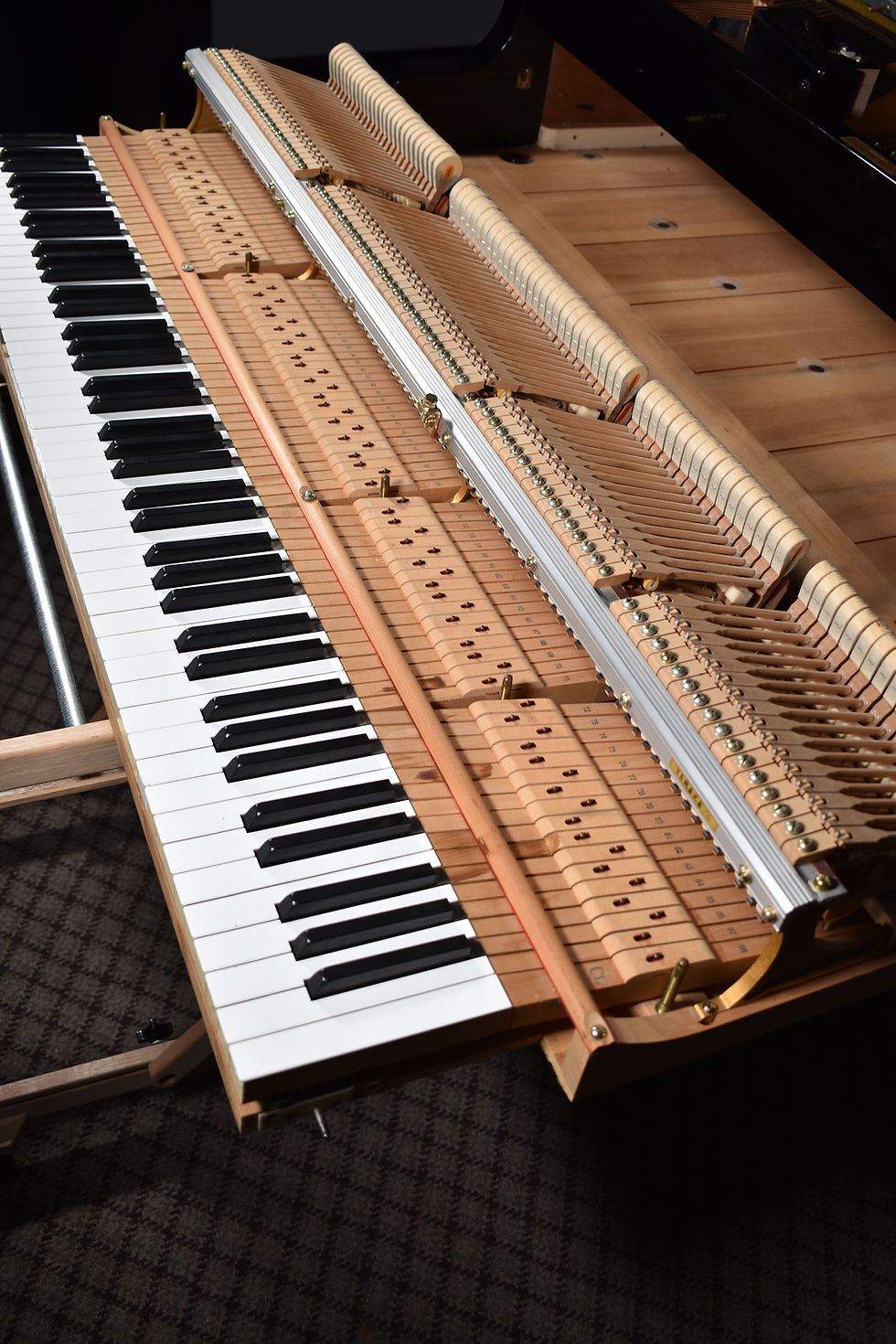
Both the mechanical and musical components of an acoustic piano are made primarily from wood, along with felt, leather, steel, and other natural materials. Together, these materials form a remarkably complex system of levers and precisely tensioned steel strings. Wood is hygroscopic, meaning it continuously absorbs and releases moisture from the surrounding air. As humidity increases, wooden components—including the soundboard, bridges, and parts of the action—absorb moisture and swell. These dimensional changes alter the regulation of the action and increase string tension, causing the piano's pitch to drift sharp. You may also notice sluggish or sticky keys and other moving parts. As humidity causes wooden components to swell, they bind at their contact points, tighten around their center pins, or rub against neighboring parts, increasing friction throughout the action.
When humidity later drops, everything contracts again. This continual cycle of expansion and contraction is far more damaging than a consistently high or consistently low humidity level. For most pianos, the ideal relative humidity is approximately 40–50%, with stability being just as important as the exact number. Rapid swings are the real culprit.
Why New York City Is Especially Challenging
New York presents a unique climate for piano owners. During the summer months, not only can outdoor humidity frequently exceed 70–90%, but afternoon thunderstorms can also cause rapid changes in air moisture content even inside. And while indoor temperatures, due to air conditioning systems, can be as much as 10°-40°F cooler, this can be a huge issue for buildings with older (or no) AC systems, buildings that lack central climate control, or spaces that rely on window air conditions.
Most modern AC and central climate control systems incorporate cooling coils into their designs which act to drain vapor from the air leaving most spaces at a comfortable 45-55% relative humidity, which is helpfully in the ideal range for pianos as well–as long as it stays there consistently. But due to the huge diversity of spaces in the city–including many older buildings, or, for example, some garden-level apartments and brownstone basements which may remain damp throughout the season–it can be difficult to know exactly what you’re dealing with when it comes to monitoring the temperature and humidity surrounding your piano.
The volatility caused by some of the more severe conditions can cause your piano to move significantly in pitch over just a few weeks, sometimes making a recent tuning seem "off" much sooner than expected.
Signs Your Piano Is Experiencing Excess Humidity
If you notice any of the following during the summer, humidity may be the culprit:
the piano won't stay in tune
notes feel sluggish or sticky
keys return slowly making smooth repetition difficult
the touch feels heavier than usual
pedals become noisy or less responsive
the tone sounds noticeably different than it did a few months ago
These symptoms don't necessarily mean something is broken. In many cases, they're simply the result of seasonal moisture affecting the piano's internal components. By following some basic best practices for humidity control, you can make sure your piano thrives through the summer months.
Start with a Hygrometer
At Integral Pianos we suggest that the first, simplest, and most affordable step you can take is to acquire a quality digital hygrometer such as this one.
Place it near your piano—not directly on top of it—and monitor the room over several weeks. Many homeowners are surprised to discover that humidity fluctuates dramatically throughout the day.
Smart hygrometers with Wi-Fi or Bluetooth can even alert you when conditions move outside your target range.
If you do discover that the humidity in your piano’s space is not consistent and regularly dips outside the recommended relative humidity range, there are a couple of solutions you can try. The important thing is to aim for gradual correction rather than trying to dry the room aggressively.
Step 1: Use Your Air Conditioning Strategically
Air conditioning is one of the best humidity-control tools available. As mentioned above, many systems include a cooling coil system that drains the air of excess moisture as it cools the room. Investigate your system to determine whether or not this is a feature included in your set-up.
Another step you can take is rather than turning the AC system completely off while you're away during the day, maintain a moderate temperature. Allowing an apartment to become hot and humid again, before cooling it back down each evening creates larger swings than maintaining a consistent indoor climate, and this consistency is crucial for both the health of your piano and your home's overall comfort.
Step 2: Consider a Dedicated Dehumidifier
If your AC system does not include an internal dehumidifying feature, it may be prudent to invest in a portable room dehumidifier for your piano’s space.
This is especially recommended if:
your piano is on a lower level
you notice condensation on windows
the room feels damp or the air feels heavy
your hygrometer regularly reads above 55%
Not every home needs one, but many New York apartments and brownstones benefit from having one especially during the hottest, most humid months of July and August, and, increasingly, as early as May and into late September as well.
Step 3: Think About Piano Placement
Where your piano sits can have just as much impact as the room's average humidity. Even within the same room, one location may experience significantly greater temperature and humidity swings than another.
This is why we recommend that whenever possible, avoid placing your piano in any of these compromising positions:
X– Directly against an exterior wall. Beside frequently opened windows or doors. Even a single burst of warm, moist air through an opened door, or a slow, steady stream of warm air through a cracked window can cause the relative humidity in the room to rise.
X– Near HVAC vents. Being hit by a gust of AC before its had a chance to disperse through a space can cause any humidity in the air to condense onto or inside the piano potentially causing major structural and functional issues.
X– Next to radiators. Similarly to the effect of AC, a radiator next to your piano in winter can disproportionately dry out the space immediately around the instrument causing the natural materials inside to dry out and become brittle, cracked, and damaged.
X– In direct afternoon sunlight. This can seriously undermine your piano’s tuning stability as well as cause potential damage both aesthetically and structurally to the instrument as a whole.
Step 4: Consider an Internal Climate Control System.
For concert instruments, professionals’ pianos, or heavily used home pianos, an internal humidity-control system can significantly reduce seasonal fluctuations inside the instrument itself. These systems monitor both the temperature and humidity levels inside the piano and automatically adjust the temperature and add or remove moisture as needed, helping the soundboard remain more stable across each season. At Integral Pianos, we recommend them especially for pianos located in challenging environments where room temperature and humidity cannot be consistently or reliably controlled.
If you’re interested in learning more about whether an internal humidity control system is right for your piano, you can book a free consultation with us on our website! Integral Pianos is a certified Piano Life Saver System (also known as Dampp Chaser) installer. As the market’s top-selling humidity control system for pianos, the PLSS set-up is very easy to maintain, requiring only periodic refills of water + pad treatment and an annual pad replacement. In addition, every Integral Pianos PLSS installation includes a warranty plus a complimentary tuning three weeks after setup!
Summer Is Also a Good Time for Service
Many piano owners assume tuning should wait until fall. In reality, summer can be an excellent time for maintenance. Often a summer tuning can be enough to keep the instrument performing beautifully well into the winter.
If your piano has already settled into the season's humidity pattern, a tuning—combined with regulation or minor adjustments, if needed—can also allow your technician to inspect how the instrument is managing the season, address any concerns you may have, improve or alter the piano’s maintenance strategy, and/or mitigate any extreme effects the instrument may be experiencing. This can be an excellent opportunity for your technician to identify any humidity-related issues before they become expensive repairs.
It’s also important to highlight that you cannot over-tune your piano. Some of our clients at Integral Pianos, particularly professional or especially pitch and/or tone sensitive musicians, prefer to have their pianos tuned quite often–even once to twice a month. If your piano is not responding or sounding as well as you’d like it to, don’t hesitate to schedule an appointment with us and let us help your piano perform to its fullest potential.
Protecting Your Instrument
A quality piano is built to the most exacting specifications, artistry, and precision and as such it performs best when its environment remains stable.
While you can't control New York City's weather, you can control the environment inside your home. Monitoring humidity, using air conditioning thoughtfully, avoiding large fluctuations, and scheduling regular professional service will help your piano maintain its tone, touch, and tuning for years to come.
At Integral Pianos, we work with piano owners throughout New York City, Westchester, Long Island, and the surrounding region to keep instruments performing at their best through every season. If your piano hasn't been serviced recently—or if you've noticed changes as the weather has warmed—we're happy to help evaluate its condition and recommend the right course of action for you and your instrument.


Comments